


Showing posts with label international politics. Show all posts
Showing posts with label international politics. Show all posts
Tuesday, 18 June 2013
Saturday, 13 April 2013
Versions of history
Some who oppose every aspect of Mrs Thatcher's political legacy have said that, nonetheless, her passing causes them to lament that she was the last British political leader who said what she meant and had any sense of history.
However there are alternative historical narratives into which she might be seen to fit. Such ideas may seem improbably far-fetched and much too close to the delusions of conspiracy theory - except when one looks around at the sheer scale of the egregiousness of the economic and politcal status quo today one has to wonder.
One has to ask why, if the titans of the US banking world were surreptitiously implementing a political programme of not just American dominance at the expense of other nations but of permanently enriching the financial elite of their own country at the expense of the population at large, any one of them would publish even a short and little known book outlining his intentions; or how, in a wider context, apparently conflicting motives can be united in a single, cunning plan. Yet one then reflects how much of those intentions has actually come about, that even if the wheels are not oiled as efficiently as some observers suppose the charriot may nevertheless be headed in that direction, and that the few countries that have stood outside the dollar-dominated system of the issuance of money as debt number Libya, Iran and North Korea.
It's probably best to get back in the garden - or the workshop - or talk to the cat.
However there are alternative historical narratives into which she might be seen to fit. Such ideas may seem improbably far-fetched and much too close to the delusions of conspiracy theory - except when one looks around at the sheer scale of the egregiousness of the economic and politcal status quo today one has to wonder.
One has to ask why, if the titans of the US banking world were surreptitiously implementing a political programme of not just American dominance at the expense of other nations but of permanently enriching the financial elite of their own country at the expense of the population at large, any one of them would publish even a short and little known book outlining his intentions; or how, in a wider context, apparently conflicting motives can be united in a single, cunning plan. Yet one then reflects how much of those intentions has actually come about, that even if the wheels are not oiled as efficiently as some observers suppose the charriot may nevertheless be headed in that direction, and that the few countries that have stood outside the dollar-dominated system of the issuance of money as debt number Libya, Iran and North Korea.
It's probably best to get back in the garden - or the workshop - or talk to the cat.

Sunday, 20 January 2013
When the dust settles
Lives have been startlingly and numbingly lost. Yet one cannot avoid reflecting on the wider international political significance of recent violent events in Algeria. Some aspects of the incident seemed puzzling from the beginning.
Despite all the murk and lack of information everyone seemed quite confident that the person behind it was Mokhtar Belmokhtar. Yet he appeared to be a man more concerned for his own fortunes than fundamentalist religious gestures.
His men turn up at the site and find a couple of buses conveniently loaded with potential hostages. We hear this is a major site with many armed guards but nothing is heard of them. Anyone might have suggested to Belmokhtar’s men that the wise thing to do would be to blow up the installation (if that was what they wanted – they were said to have semtex) and move out quickly into the desert with a large but manageable number of hostages for future ransom - apparently their source of very large funds in recent years. They didn’t seem to have any very well formulated or negotiable demands. They seemed just to settle down and wait for the predictable arrival of the Algerian army, which of course whacked them with its usual lack of over-much concern for the lives of hostages let alone opponents. A number of people have lost their lives, but we do not know – and probably never will – how serious this whacking was by Algerian army standards. Our Foreign Secretary, William Hague, appears to understand that those standards are rather high: "Whatever people think of them, whatever has been said about the Algerian military, they are experienced." Mr Hague is renowned for his turn of phrase.
However that may be, who has gained? The Algerian government, no doubt looking east and south at Islamist or supposed Islamist uprisings against repressive governments, as well as at the general instability and lawlessness of their desert regions, and now persuaded that their political future lies more and more with western economic and strategic interests (having recently received a cordial visit from the new French president, following close on the footsteps of US Secretary of State Hillary Clinton), have demonstrated to their unruly subjects and neighbours that they will ruthlessly and effectively put down insurrection or incursion, and have shown western states that they are indispensible and reliable allies in the war on terror, and that international terror is what their troubles are all about (just like Mr Putin’s were). Western states can perhaps find it easier to suggest openly that west Africa needs the kind of treatment given to Yemen - or more.
However that may be, prompt to the cue, come today's remarks from Mr Cameron. First the acknowledgement of the Algerians' role:
"No one should underestimate the difficulties of responding to an attack on this scale with 30 terrorists absolutely determined to take lives, and we should recognise all the Algerians have done to work with us and to help and co-ordinate with us, and I'd like to thank them for that,"
Then the broader message:
"This is a global threat and it will require a global response. It will require a response that is about years, even decades, rather than months," he said.
"It requires a response that is patient and painstaking, that is tough but also intelligent, but above all has an absolutely iron resolve and that is what we will deliver over these coming years."
There are parallels between north Africa and Pakistan/Afghanistan, he said.
"It is different in scale but there are similarities. What we face is an extremist Islamist violent al-Qaida-linked terrorist group – just as we have to deal with that in Pakistan and in Afghanistan, so the world needs to come together to deal with this threat in north Africa. It is similar because it is linked to al-Qaida, it wants to destroy our way of life, it believes in killing as many people as it can."
'The world needs to come together...' - one can only hope that the inclusive message finds more resonance than our Prime Minister's earlier claim to his own nation that we were 'all in this together', but Cameron's idea of the globalised world (that's a selective rather than an inclusive qualifier - only the globalised can act globally) coming together to sort out forcefully (or do I mean forcibly?) the problems of a people 'with a per capita gross domestic product of only around US$1,000 a year and average life expectancy of only 51 years - in a territory twice the size of France (per capital GDP $35,000 and upwards)' is more than a little disturbing. However, Cameron's remarks follow much the same script as his remarks yesterday, but focuses attention specifically on Africa as the new theatre of our endless struggle:
"We face a large and existential terrorist threat from a group of extremists based in different parts of the world who want to do the biggest possible amount of damage to our interests and way of life," he said. "Those extremists thrive when they have ungoverned spaces in which they can exist, build and plan."
The idea of moving on to Africa after the highly dubious success in Afghanistan has freed up our military resources is interesting, as is the thought of the possible long-term conflicts between the different styles of western and Chinese involvement in a continent that is seen as so important in terms of natural resources. Apart from the natural gas in question here, uranium for French nuclear electricity generating plants is only one concern - though a nearby one. The US has long had its eye on this problem:
And in a presentation by Vice Admiral Moeller at an Africom conference held at Fort McNair on February 18, 2008 and subsequently posted on the web by the Pentagon, he declared that protecting "the free flow of natural resources from Africa to the global market" was one of Africom's "guiding principles" and specifically cited "oil disruption," "terrorism," and the "growing influence" of China as major "challenges" to U.S. interests in Africa.
Undoubtedly there are 'extremist Islamist' groups deeply hostile to our 'way of life' but, ironically, they are most conspicuous (and have the deepest pockets) amongst the Wahhabis of Saudi Arabia, as Thomas Mountain explains. Elsewhere such extremists are found in the territory of our other ally, Pakistan, and missionaries have been despatched to the Sahel from both quarters.
Our habit of referring to "Al Qaida 3", as if it were the latest release of a familiar computer program, or to "the Al Qaida franchise in north Africa" (Vicki Huddlestone, herself not always as discerning as some might wish as to which foreign governments to support) encourages us to think that by labelling a thing, and preferably labelling it as a new version of something we tell ourselves we have encountered and understood before, we have got to grips with it, without the wearisome necessity actually to understand the people through whose lives it is currently manifested. Similarly, I find little assurance in Sir Jeremy Greenstock's advice that what the west must do to eliminate the danger to our 'way of life', and to the individual lives of some of us, is to locate and fill 'ungoverned spaces', as if there were nothing there (apart from the well-known enemy) to understand, and just filling the 'space' with any working government is the solution - not the former Libyan government of course, or even the currently toppling Syrian one, but apparently Algeria's would do.
However that may be, perhaps Mr Cameron finds it convenient to be able to issue such stirring words when western military involvement in north Africa is apparently more advanced than is generally acknowledged. Why Mr Cameron should take centre stage in this scene is a little more puzzling but perhaps it is only another aspect of the US 'leading from behind'.
As the man said, those of us who liked Afghanistan are going to love Africa. Apart from anything else, it's so much larger. It all makes Suez look so innocent, a foreign military episode that destroyed a British Prime Minister and saw the United States strong-arm Britain, France and Israel, but Britain especially, into abandonning its military coercion of Egypt - autres temps, autres mœurs - not that it did the US the slightest good in the Arab world.
Despite all the murk and lack of information everyone seemed quite confident that the person behind it was Mokhtar Belmokhtar. Yet he appeared to be a man more concerned for his own fortunes than fundamentalist religious gestures.
His men turn up at the site and find a couple of buses conveniently loaded with potential hostages. We hear this is a major site with many armed guards but nothing is heard of them. Anyone might have suggested to Belmokhtar’s men that the wise thing to do would be to blow up the installation (if that was what they wanted – they were said to have semtex) and move out quickly into the desert with a large but manageable number of hostages for future ransom - apparently their source of very large funds in recent years. They didn’t seem to have any very well formulated or negotiable demands. They seemed just to settle down and wait for the predictable arrival of the Algerian army, which of course whacked them with its usual lack of over-much concern for the lives of hostages let alone opponents. A number of people have lost their lives, but we do not know – and probably never will – how serious this whacking was by Algerian army standards. Our Foreign Secretary, William Hague, appears to understand that those standards are rather high: "Whatever people think of them, whatever has been said about the Algerian military, they are experienced." Mr Hague is renowned for his turn of phrase.
However that may be, who has gained? The Algerian government, no doubt looking east and south at Islamist or supposed Islamist uprisings against repressive governments, as well as at the general instability and lawlessness of their desert regions, and now persuaded that their political future lies more and more with western economic and strategic interests (having recently received a cordial visit from the new French president, following close on the footsteps of US Secretary of State Hillary Clinton), have demonstrated to their unruly subjects and neighbours that they will ruthlessly and effectively put down insurrection or incursion, and have shown western states that they are indispensible and reliable allies in the war on terror, and that international terror is what their troubles are all about (just like Mr Putin’s were). Western states can perhaps find it easier to suggest openly that west Africa needs the kind of treatment given to Yemen - or more.
However that may be, prompt to the cue, come today's remarks from Mr Cameron. First the acknowledgement of the Algerians' role:
"No one should underestimate the difficulties of responding to an attack on this scale with 30 terrorists absolutely determined to take lives, and we should recognise all the Algerians have done to work with us and to help and co-ordinate with us, and I'd like to thank them for that,"
Then the broader message:
"This is a global threat and it will require a global response. It will require a response that is about years, even decades, rather than months," he said.
"It requires a response that is patient and painstaking, that is tough but also intelligent, but above all has an absolutely iron resolve and that is what we will deliver over these coming years."
There are parallels between north Africa and Pakistan/Afghanistan, he said.
"It is different in scale but there are similarities. What we face is an extremist Islamist violent al-Qaida-linked terrorist group – just as we have to deal with that in Pakistan and in Afghanistan, so the world needs to come together to deal with this threat in north Africa. It is similar because it is linked to al-Qaida, it wants to destroy our way of life, it believes in killing as many people as it can."
'The world needs to come together...' - one can only hope that the inclusive message finds more resonance than our Prime Minister's earlier claim to his own nation that we were 'all in this together', but Cameron's idea of the globalised world (that's a selective rather than an inclusive qualifier - only the globalised can act globally) coming together to sort out forcefully (or do I mean forcibly?) the problems of a people 'with a per capita gross domestic product of only around US$1,000 a year and average life expectancy of only 51 years - in a territory twice the size of France (per capital GDP $35,000 and upwards)' is more than a little disturbing. However, Cameron's remarks follow much the same script as his remarks yesterday, but focuses attention specifically on Africa as the new theatre of our endless struggle:
"We face a large and existential terrorist threat from a group of extremists based in different parts of the world who want to do the biggest possible amount of damage to our interests and way of life," he said. "Those extremists thrive when they have ungoverned spaces in which they can exist, build and plan."
The idea of moving on to Africa after the highly dubious success in Afghanistan has freed up our military resources is interesting, as is the thought of the possible long-term conflicts between the different styles of western and Chinese involvement in a continent that is seen as so important in terms of natural resources. Apart from the natural gas in question here, uranium for French nuclear electricity generating plants is only one concern - though a nearby one. The US has long had its eye on this problem:
And in a presentation by Vice Admiral Moeller at an Africom conference held at Fort McNair on February 18, 2008 and subsequently posted on the web by the Pentagon, he declared that protecting "the free flow of natural resources from Africa to the global market" was one of Africom's "guiding principles" and specifically cited "oil disruption," "terrorism," and the "growing influence" of China as major "challenges" to U.S. interests in Africa.
Undoubtedly there are 'extremist Islamist' groups deeply hostile to our 'way of life' but, ironically, they are most conspicuous (and have the deepest pockets) amongst the Wahhabis of Saudi Arabia, as Thomas Mountain explains. Elsewhere such extremists are found in the territory of our other ally, Pakistan, and missionaries have been despatched to the Sahel from both quarters.
Our habit of referring to "Al Qaida 3", as if it were the latest release of a familiar computer program, or to "the Al Qaida franchise in north Africa" (Vicki Huddlestone, herself not always as discerning as some might wish as to which foreign governments to support) encourages us to think that by labelling a thing, and preferably labelling it as a new version of something we tell ourselves we have encountered and understood before, we have got to grips with it, without the wearisome necessity actually to understand the people through whose lives it is currently manifested. Similarly, I find little assurance in Sir Jeremy Greenstock's advice that what the west must do to eliminate the danger to our 'way of life', and to the individual lives of some of us, is to locate and fill 'ungoverned spaces', as if there were nothing there (apart from the well-known enemy) to understand, and just filling the 'space' with any working government is the solution - not the former Libyan government of course, or even the currently toppling Syrian one, but apparently Algeria's would do.
However that may be, perhaps Mr Cameron finds it convenient to be able to issue such stirring words when western military involvement in north Africa is apparently more advanced than is generally acknowledged. Why Mr Cameron should take centre stage in this scene is a little more puzzling but perhaps it is only another aspect of the US 'leading from behind'.
As the man said, those of us who liked Afghanistan are going to love Africa. Apart from anything else, it's so much larger. It all makes Suez look so innocent, a foreign military episode that destroyed a British Prime Minister and saw the United States strong-arm Britain, France and Israel, but Britain especially, into abandonning its military coercion of Egypt - autres temps, autres mœurs - not that it did the US the slightest good in the Arab world.
Saturday, 19 January 2013
Background reading
I am no expert on north Africa or on any of the groups that our Prime Minister refers to:
"We face a large and existential terrorist threat from a group of extremists based in different parts of the world who want to do the biggest possible amount of damage to our interests and way of life," he said. "Those extremists thrive when they have ungoverned spaces in which they can exist, build and plan."
Yet I can glean enough information to see that the version of events in Algeria presented to us by our politicians and most of our press is largely a mixture of simplification and falsification.
The Algerian government and military are presented to us simply as a tough act with great experience of dealing with terrorism, who might nevertheless have benefitted from British 'intelligence' about illegal and terrorist activity in north Africa. The region (now that the west is adandonning Afghanistan to its fate) is presented to us as a kind of vacuum. Because it does not have a functioning national state government of the type we are accustomed to in the west, there can be no social or economic structure worth taking account of. Yet,
Smuggling has been around in the southern Sahara for as long as trans-Saharan caravan trading has existed, in other words, since time immemorial. The transport of goods from north to south across the Sahara and vice versa is the prerogative of desert people, most notably the Arabs, or Moors, and the Touareg. Members of certain families and clans are caravan traders almost by birthright, and the desert road is in their blood. Nice distinctions between the legality and illegality of different types of cargo matter less to these traders than to the distant governments under whose authority they are supposed to operate. ...
In bygone colonial and pre-colonial times, trans-Saharan trading was often dominated by large Arab families and clans, especially the Cha’ambi from the Tidikelt, the Ahl Azzi of the Touat, the Berabiche clans who lived in the deserts north of Timbuktu and the Kounta who lived on the eastern shores of the Niger bend, north of Gao. These families would trade across the desert with each other, turning the Sahara into one unified economic, social and cultural space. Their activity created links and ties that have survived and gradually mutated into the trading or smuggling networks of today. ... Not only trade goods, but politics, religion, tribal loyalty, power and influence are determined by those ties, making the Sahara one of the most complex regions in the world to understand. This economic and social unity of the Saharan space also explains why the borders imposed on the region at the end of the colonial era were so problematic to livelihoods and connections and so often despised by desert people.
Into this empty space, it is assumed, a distinct transnational corporation, known to us as Al Qaida, inserts itself, rather as a western corporation might move in to exploit and trade in newly discovered natural resources. This intruder is capable of directing, controlling and 'radicalising' the previously inchoate forces of the region (which hitherto had been harmlessly engrossed in killing and robbing each other) so that they become an 'existential threat' to our western civilisation and way of life, and thus the new targets of the 'war on terror'.
The Americans were convinced that the Sahel was becoming a crucible for anti-western terror groups inspired by Islam. Pondering the anti-american topography of the globe, they noticed that a huge contiguous swathe of central Asia, east and west Africa was becoming ‘radicalised’, from Afghanistan, through Pakistan, Iran, Iraq, Palestine and Yemen, into Africa via Somalia, the Sudan and across finally to Niger, Mali, Algeria and Mauritania. With that strategic and remote point of view so favoured by intelligence analysts and their political clients, this banana shaped chunk of earth was seen as a homogenous battleground, with each territory within it linked to the others by dark and hostile forces.
Of course it is undeniable that many of the progenitors of these anti-western terror groups inspired by Islam had been brought together in the mujahideen struggle against the Soviet Union in Afghanistan, which the west had so assiduously encouraged:
Reagan was determined to make Afghanistan the Soviet Vietnam. Therefore in 1986 he decided to provide the mujahideen with portable surface-to-air Stinger missiles, which proved devastatingly effective in increasing Soviet air losses (particularly helicopters). The war in Afghanistan cost the United States about $1 billion per annum in aid to the mujahideen; it cost the Soviet Union eight times as much, helping bankrupt its economy.
Yet now they should "be on notice they will find no sanctuary, no refuge, not in Algeria or anywhere else, not in North Africa, not anywhere … they will have no place to hide". This is a world seen not as a collection of societies, habitats, communities, but as a battleground, a global chessboard on which pieces are moved, and taken, at will.
At the level of overt policy and action our governments seldom if ever engage with the world as it is and as those involved in its daily social or economic activities actually experience it. They engage instead with a convenient construct, to which all experience and analysis must be fitted. (It is not of course a failing unique to governments: citizens struggling to understand economic and social disintegration in the west may create in their minds a similar monolith and come almost to welcome each new confirmation of gloom and despair: the illusion of understanding is all that is left.) At the same time governments, directly and indirectly, employ vast and varied companies of actors pulling levers and triggers to create events in supposed pursuit or destruction of those political and economic constructs.
Events, dear boy, events; but somehow they have become more malign. No more 'ungoverned spaces' is what we apparently need: never mind how unadept we have shown ourselves in governing spaces on our own doorstep. Perhaps the Algerians, who of course owe much to European colonial history, can show us how to do it.
This follows gradual attempts by Paris to turn a page in its bleak relations with Algiers. Hollande visited Algeria last month, offering a qualified apology for the harm France did to the country during its 132-year rule, and calling for greater economic co-operation between the two countries. This co-operation was to include an increased emphasis on the kind of deals that allowed multinationals such as Total and BP to tap into Algeria's oil and gas riches. ...Co-operation on Mali is clearly a move by the Algerian president, Abdelaziz Bouteflika, to respond to Hollande's hand of friendship. Despite years of relative isolationism and mistrust, Bouteflika believes his country's future lies in increased participation in a profit-driven global economy and specifically trade with western neighbours.
"We face a large and existential terrorist threat from a group of extremists based in different parts of the world who want to do the biggest possible amount of damage to our interests and way of life," he said. "Those extremists thrive when they have ungoverned spaces in which they can exist, build and plan."
Yet I can glean enough information to see that the version of events in Algeria presented to us by our politicians and most of our press is largely a mixture of simplification and falsification.
The Algerian government and military are presented to us simply as a tough act with great experience of dealing with terrorism, who might nevertheless have benefitted from British 'intelligence' about illegal and terrorist activity in north Africa. The region (now that the west is adandonning Afghanistan to its fate) is presented to us as a kind of vacuum. Because it does not have a functioning national state government of the type we are accustomed to in the west, there can be no social or economic structure worth taking account of. Yet,
Smuggling has been around in the southern Sahara for as long as trans-Saharan caravan trading has existed, in other words, since time immemorial. The transport of goods from north to south across the Sahara and vice versa is the prerogative of desert people, most notably the Arabs, or Moors, and the Touareg. Members of certain families and clans are caravan traders almost by birthright, and the desert road is in their blood. Nice distinctions between the legality and illegality of different types of cargo matter less to these traders than to the distant governments under whose authority they are supposed to operate. ...
In bygone colonial and pre-colonial times, trans-Saharan trading was often dominated by large Arab families and clans, especially the Cha’ambi from the Tidikelt, the Ahl Azzi of the Touat, the Berabiche clans who lived in the deserts north of Timbuktu and the Kounta who lived on the eastern shores of the Niger bend, north of Gao. These families would trade across the desert with each other, turning the Sahara into one unified economic, social and cultural space. Their activity created links and ties that have survived and gradually mutated into the trading or smuggling networks of today. ... Not only trade goods, but politics, religion, tribal loyalty, power and influence are determined by those ties, making the Sahara one of the most complex regions in the world to understand. This economic and social unity of the Saharan space also explains why the borders imposed on the region at the end of the colonial era were so problematic to livelihoods and connections and so often despised by desert people.
Into this empty space, it is assumed, a distinct transnational corporation, known to us as Al Qaida, inserts itself, rather as a western corporation might move in to exploit and trade in newly discovered natural resources. This intruder is capable of directing, controlling and 'radicalising' the previously inchoate forces of the region (which hitherto had been harmlessly engrossed in killing and robbing each other) so that they become an 'existential threat' to our western civilisation and way of life, and thus the new targets of the 'war on terror'.
The Americans were convinced that the Sahel was becoming a crucible for anti-western terror groups inspired by Islam. Pondering the anti-american topography of the globe, they noticed that a huge contiguous swathe of central Asia, east and west Africa was becoming ‘radicalised’, from Afghanistan, through Pakistan, Iran, Iraq, Palestine and Yemen, into Africa via Somalia, the Sudan and across finally to Niger, Mali, Algeria and Mauritania. With that strategic and remote point of view so favoured by intelligence analysts and their political clients, this banana shaped chunk of earth was seen as a homogenous battleground, with each territory within it linked to the others by dark and hostile forces.
Of course it is undeniable that many of the progenitors of these anti-western terror groups inspired by Islam had been brought together in the mujahideen struggle against the Soviet Union in Afghanistan, which the west had so assiduously encouraged:
Reagan was determined to make Afghanistan the Soviet Vietnam. Therefore in 1986 he decided to provide the mujahideen with portable surface-to-air Stinger missiles, which proved devastatingly effective in increasing Soviet air losses (particularly helicopters). The war in Afghanistan cost the United States about $1 billion per annum in aid to the mujahideen; it cost the Soviet Union eight times as much, helping bankrupt its economy.
Yet now they should "be on notice they will find no sanctuary, no refuge, not in Algeria or anywhere else, not in North Africa, not anywhere … they will have no place to hide". This is a world seen not as a collection of societies, habitats, communities, but as a battleground, a global chessboard on which pieces are moved, and taken, at will.
At the level of overt policy and action our governments seldom if ever engage with the world as it is and as those involved in its daily social or economic activities actually experience it. They engage instead with a convenient construct, to which all experience and analysis must be fitted. (It is not of course a failing unique to governments: citizens struggling to understand economic and social disintegration in the west may create in their minds a similar monolith and come almost to welcome each new confirmation of gloom and despair: the illusion of understanding is all that is left.) At the same time governments, directly and indirectly, employ vast and varied companies of actors pulling levers and triggers to create events in supposed pursuit or destruction of those political and economic constructs.
Events, dear boy, events; but somehow they have become more malign. No more 'ungoverned spaces' is what we apparently need: never mind how unadept we have shown ourselves in governing spaces on our own doorstep. Perhaps the Algerians, who of course owe much to European colonial history, can show us how to do it.
This follows gradual attempts by Paris to turn a page in its bleak relations with Algiers. Hollande visited Algeria last month, offering a qualified apology for the harm France did to the country during its 132-year rule, and calling for greater economic co-operation between the two countries. This co-operation was to include an increased emphasis on the kind of deals that allowed multinationals such as Total and BP to tap into Algeria's oil and gas riches. ...Co-operation on Mali is clearly a move by the Algerian president, Abdelaziz Bouteflika, to respond to Hollande's hand of friendship. Despite years of relative isolationism and mistrust, Bouteflika believes his country's future lies in increased participation in a profit-driven global economy and specifically trade with western neighbours.
Tuesday, 8 May 2012


Monday, 13 February 2012
Greece turns a corner
The Greek parliament has accepted the terms of the further austerity package on which the next European bail-out depends.
There are still other hurdles to be passed before the funds are actually made available. the eurogroup of finance ministers must approve; the Bundestag must approve; an agreement must be concluded with the private creditors.
Additionally the Greek government has to give an undertaking to its European saviours that the measures will be irreversible and implemented by any future elected (or unelected) Greek government. A general election is scheduled for April.
If those hurdles are cleared the great bulk of the 130 billion Euros of funds will be held in an account to which no Greek has any access and used directly to pay interest on Greece's international loans.

Unsurprisingly international markets are rallying despite growing violence, anarchy and suffering on the Greek streets. The new package will be insufficient to free the economy from the debt burden and enable it to escape from economic shrinkage.
Everyone knows that, but in the meantime, until the next crisis is reached, international interests will continue to profit, whilst the Greek economy and Greek society is cordonned off in a kind of ghetto. Greece is, in international or even European terms, a small economy (and 'Europe as a whole is in external balance and should be able to solve its own internal problems'), but wealth can still be extracted from Greece, and the radical failure of its finances could unravel the knitted sleeve of international banking and finance.

 |
| A society poised for recovery? |
The Greek parliament has accepted the terms of the further austerity package on which the next European bail-out depends.
There are still other hurdles to be passed before the funds are actually made available. the eurogroup of finance ministers must approve; the Bundestag must approve; an agreement must be concluded with the private creditors.
Additionally the Greek government has to give an undertaking to its European saviours that the measures will be irreversible and implemented by any future elected (or unelected) Greek government. A general election is scheduled for April.
If those hurdles are cleared the great bulk of the 130 billion Euros of funds will be held in an account to which no Greek has any access and used directly to pay interest on Greece's international loans.

Unsurprisingly international markets are rallying despite growing violence, anarchy and suffering on the Greek streets. The new package will be insufficient to free the economy from the debt burden and enable it to escape from economic shrinkage.
 |
| Light at the end of the tunnel |

Sunday, 5 February 2012
Gander sauce with all the trimmings
One of the reasons the international financial markets are said to be dubious about the economic prospects of Greece is that it has few flourishing industrial sectors.
Greek shipping is successful but brings little economic benefit to the country because the ship owners have structured their businesses to ensure that profits are retained in foreign countries. Hardly behaviour of which international financiers would approve.
Greek tourism is said to 'lack infrastructure'. Cue international development enterprises led by billionaires, flamboyant or crespuscular, with top dressing of star architects. See Aberdeen, or Bulgaria. Certainly the Ace of Trumps could never be accused of hiding his light under the scantest bushel, and is now too busy saving his own country to spend much time degrading Aberdeenshire. Is our noble Lord Gherkin crespuscular? One cannot think so, neither in Bulgaria nor here - although someone with potential profits at stake may need to work into the night if they are to overcome the massed ranks of the RSPB (the Conservative Party with binoculars) against the creation of the 'Thames Hub' or 'Boris Island'? Perhaps one of our architects might be persuaded to design something similar to beef up that Greek infrastructure for the returning northern European tourists once the Euro resurgent rises giddily above the Drachma reinvented.
Greek shipping is successful but brings little economic benefit to the country because the ship owners have structured their businesses to ensure that profits are retained in foreign countries. Hardly behaviour of which international financiers would approve.
Greek tourism is said to 'lack infrastructure'. Cue international development enterprises led by billionaires, flamboyant or crespuscular, with top dressing of star architects. See Aberdeen, or Bulgaria. Certainly the Ace of Trumps could never be accused of hiding his light under the scantest bushel, and is now too busy saving his own country to spend much time degrading Aberdeenshire. Is our noble Lord Gherkin crespuscular? One cannot think so, neither in Bulgaria nor here - although someone with potential profits at stake may need to work into the night if they are to overcome the massed ranks of the RSPB (the Conservative Party with binoculars) against the creation of the 'Thames Hub' or 'Boris Island'? Perhaps one of our architects might be persuaded to design something similar to beef up that Greek infrastructure for the returning northern European tourists once the Euro resurgent rises giddily above the Drachma reinvented.
 |
| Undeveloped Greek coastline |
 |
| Virgin Greek countryside |
 |
| Delapidated Greek public building in need of foreign investment |
 |
| Greece - step this way? |
Friday, 13 January 2012
A Fistful of Dollars
‘Despite the fact that they lay down explicit limitations on capital movements, the Bretton Woods agreements delineated an international monetary system that, in practice, made these movements indispensable. At this point we can see how the Bretton Woods agreements opened the way to the post-war ‘dollar gap’ and to the subsequent international ‘dollar glut’ the consequences of which we are still paying for.’
Amato and Fantacci: The End of Finance
Amato and Fantacci: The End of Finance
Wednesday, 11 January 2012
The value of oil
It is often claimed that physical control of oil supplies lies behind geo-political moves by western nations, especially the United States, but there is an argument that the interest in oil is subservient to the interest in controlling the international monetary system and that the OPEC oil-price shock of the 1970s was actually engineered by western interests to that purpose.
"...Such is not the case in the United States, whose number one export product is the dollar itself. This unique arrangement is largely due to the dollar’s World Reserve currency role, which is underpinned by its petrodollar role. Every nation needs to get dollars to purchase oil, some more than others. This means their trade targets are countries that utilize the dollar, with the U.S. consumer as the main target for export products of the nation seeking to build dollar reserves."
We may be seeing the beginning of the end of that form of economic dominance through the unexpected but fatal consequence of the spiralling growth of unregulated financial trading as a cancer within our western material prosperity.
See http://www.democraticunderground.com/discuss/duboard.php?az=view_all&address=114x14286
This line or argument possibly places in a new light the United States' reluctance to move away from oil energy dependence in response to concerns about global warming.
There is a further irony in that what made such a ploy necessary, according to this line of reasoning, was the cost of the Vietnam War (just as the cost of consequent US military ventures may be accelerating their economic decline), and so the west's engineering or accelerating the collapse of the Soviet empire is overshadowed by the potential collapse of the west as a final consequence of its armed struggle against communism.
"...Such is not the case in the United States, whose number one export product is the dollar itself. This unique arrangement is largely due to the dollar’s World Reserve currency role, which is underpinned by its petrodollar role. Every nation needs to get dollars to purchase oil, some more than others. This means their trade targets are countries that utilize the dollar, with the U.S. consumer as the main target for export products of the nation seeking to build dollar reserves."
We may be seeing the beginning of the end of that form of economic dominance through the unexpected but fatal consequence of the spiralling growth of unregulated financial trading as a cancer within our western material prosperity.
See http://www.democraticunderground.com/discuss/duboard.php?az=view_all&address=114x14286
This line or argument possibly places in a new light the United States' reluctance to move away from oil energy dependence in response to concerns about global warming.
There is a further irony in that what made such a ploy necessary, according to this line of reasoning, was the cost of the Vietnam War (just as the cost of consequent US military ventures may be accelerating their economic decline), and so the west's engineering or accelerating the collapse of the Soviet empire is overshadowed by the potential collapse of the west as a final consequence of its armed struggle against communism.
Tuesday, 10 January 2012
It's all about central banks?
http://www.atimes.com/atimes/Middle_East/MD14Ak02.html
http://www.golemxiv.co.uk/2012/01/a-new-reserve-currency-to-challenge-the-dollar-whats-really-going-on-in-the-straits-of-hormuz/?utm_source=rss&utm_medium=rss&utm_campaign=a-new-reserve-currency-to-challenge-the-dollar-whats-really-going-on-in-the-straits-of-hormuz
http://www.golemxiv.co.uk/2012/01/a-new-reserve-currency-to-challenge-the-dollar-whats-really-going-on-in-the-straits-of-hormuz/?utm_source=rss&utm_medium=rss&utm_campaign=a-new-reserve-currency-to-challenge-the-dollar-whats-really-going-on-in-the-straits-of-hormuz
Thursday, 15 September 2011
Shock and awe 2
The official US prescription for dealing with the current shambles in European government debt and, perhaps more pressingly, banking system, is said to be "overwhelming force".
Sounds good - for the time being.
Sounds good - for the time being.
Monday, 12 September 2011
Go east, young man.
 |
| I think it's in that direction. |
The idea constantly nags at the back of my mind, not only that sections of Western society and of our country in particular are partly responsible for the appalling developments in Russian society since the fall of communism, but that our own society here bears more than comfortable resemblances to Russia now.
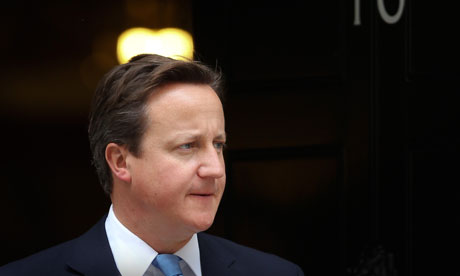
So it is perhaps unsurprising that David Cameron sees relief in the East:
Downing Street intends for £215m worth of deals to be done between Russia and the UK when the prime minister visits the Kremlin, despite a warning to David Cameron from four former foreign secretaries that business people already operating in the country are "victims of an increasingly potent mix of corruption and lawlessness".
Their letter says hundreds of thousands of Russian businessmen are detained in jails after falling victim to corruption sanctioned by the authorities.
I don't of course mean by what I said above that Cameron and Osborne are busily puting British businessmen into clink here, but...
The exiled Russian tycoon Boris Berezovsky has warned Cameron that his decision to meet Putin is a "historical mistake" that will lead to more bloodshed inside the country. "The longer you speak with the gangster head of a country, the more victims there will be … until these cannibals are erased from the story," Berezovsky said in a telephone interview from London.
It will, of course, all fall on deaf ears. Cameron's untroubled view is:
"Russia is resource rich and services light. Britain is the opposite. In fact Britain is already one of the largest foreign direct investors in Russia. And Russian companies already account for about a quarter of all foreign initial public offerings on the London Stock Exchange"
The prime minister went on to say that Russia offered one of the strongest business environments in Europe and had some of the "lowest barriers to entrepreneurship" in the world. Britain, he said, was keen to work with the Russian government to help strengthen the business environment in the country, so that more British businesses were able to invest.
Saturday, 13 August 2011
Lookout
I hope people anxious to understand what is going on day by day in the economy and the 'markets' and how to interpret their newspaper headlines (UK "bank shares rally", "US stocks soare,") are following golem XIV thoughts, the insider's outsider.
Thursday, 11 August 2011
Man overboard!
It's remarkable how keen voyagers become to throw their fellow passengers to the sharks once the boat gets leaky.
It's time for straight talking among nations. Of course it's open season on the USA now, post Standard and Poors, with India climbing into the pulpit, and China warning that the US needs to cure itself of its 'debt addiction' (a little like your drug dealer advising you to lay off the hard stuff) and to do away with its 'bloated social security spending'. (Chinese style of welfare for the US - that should appeal to the Tea Party.) Oh, and of course China recommends defence cuts. Maybe axing patent protection efforts could come nest.
Elsewhere Saudi Arabia, that bastion of human rights, is telling Syria it really has gone beyond the pale. And the Iranian police have contacted London's Metropolitan Police advising them to show restraint in dealing with rioters.
There's always someone available to put you right.
It's time for straight talking among nations. Of course it's open season on the USA now, post Standard and Poors, with India climbing into the pulpit, and China warning that the US needs to cure itself of its 'debt addiction' (a little like your drug dealer advising you to lay off the hard stuff) and to do away with its 'bloated social security spending'. (Chinese style of welfare for the US - that should appeal to the Tea Party.) Oh, and of course China recommends defence cuts. Maybe axing patent protection efforts could come nest.
Elsewhere Saudi Arabia, that bastion of human rights, is telling Syria it really has gone beyond the pale. And the Iranian police have contacted London's Metropolitan Police advising them to show restraint in dealing with rioters.
There's always someone available to put you right.
Tuesday, 9 August 2011
Israel
Israelis march for lower living costs.

What happens when the US has to start cutting its aid?

What happens when the US has to start cutting its aid?
Wednesday, 13 July 2011
Gear change
 |
| Is it a bus or a punt? |
I used to think governments were the mechanics of the bus depot, tightening up the wheel nuts from time to time, but now I see they are mostly in the driver’s cab, grappling with the steering wheel alongside the bank chief executives.
So I am off to Oxford, land of punts, buttered crumpets, real philosophy and bookcases, to pose as a furniture maker for a while.
Sunday, 3 July 2011
What next?

Throughout the eurozone crisis the EU has insisted that Greece carry out the impossible in order to stave off the inevitable.
The Financial Times, Lex, 29 June 2011
The obvious question, with an equally obvious answer, is, why? Who exactly benefits from this process, both in the meantime and in the longer term? Nobody in the financial world apparently expects the Greek assets currently put up for privatisation to raise more than a quarter of the sum officially required. So, it must be a planned softening-up process, preparing the way for even more politically unacceptable transfers of state assets to the private sector. Greece today, Portugal tomorrow: soon everyone's going to be doing it.
Our government here is clearly deeply sympathetic. The British of course pioneered this sort of thing decades ago, even without IMFs and ECBs to push them into it, although, to give her her due, Margaret Thatcher did believe the national assets would end up being owned by a nation of Sids rather than a select group of spivs. After cutting their teeth at home, British investment banks, financial wizards and ex-government functionaries turned their honest shillings showing Russians and eastern Europeans how to do it, so creating the wonderful oligarchs who keep our football clubs and newspapers alive today. Who said the public doesn't benefit?
Tuesday, 28 June 2011
Infrastructure or Hades: a land fit for heroes
 |
| No Shangri-La in Greece |
Lahham said more than half of the assets up for sale comprises land for commercial or residential development, which is unattractive because of the difficulty of securing financing to build in Greece. His firm was attracted by the potential of Greek tourism but legislation made it difficult for foreign companies to develop the country's islands and beaches. "Greece is a fantastic tourism destination with very undeveloped infrastructure. There isn't a Four Seasons or a Shangri-La or a Peninsula or any of the major hotel chains in Greece," he said. "It's strange, they would love to be there and we would love to build it for them, but somehow regulations don't allow you to do so."
Monday, 27 June 2011

Saturday, 18 June 2011
Interesting times
As politicians and officials manoeuvre to foist yet another load of unrepayable debt upon Greece, the motivations and interests of some are more discernible than others.
The politicians seem the easier to fathom. Angela Merkel wants to appease sentiment amongst her electorate that resents any further German money being used to support what are seen as idle and irresponsible southern Europeans, apparently unaware that a prime object of keeping the Greeks ‘afloat’ is to avoid German banks (among others) being forced to write down the value of large imprudent international loans, and of the wider fact that eurozone policy is run for the benefit of the central European economies such as Germany’s (admittedly Germany apparently did not want the likes of the Greeks to join in the first place). I say ‘appease’ because Mrs Merkel knows that she will have to give in to another Greek/bank ‘rescue’ in the end and it took only a handbagging from John ‘Errol Flynn’ Lipsky, newly in charge of the IMF, to bring her rhetoric to more immediate heel.
Nicolas Sarkozy, the ex-officio Co-Prince of Andorra, and drinking water supplier to Monaco, has a less troublesome electorate in this respect and knows as well as Mrs Merkel that French banks have even more to lose from a Greek default than the Germans.
Our own David Cameron, former special adviser to Norman Lamont, former director of corporate affairs at the late and much lamented Carlton Communications, still a direct descendant of the illegitimate daughter of King William IV, just sees a chance to let others stump up the cash to keep the financial show on the road. Ever focussing on the immediate objective (until it comes to the dismembering of the British state in the interests of private enterprise) he knows that British banks have less to worry about than some in this particular can of worms and lending to Ireland when you expected to get it back with interest is one thing, whilst lending to Greece when you know you will not is another.
In thinking no-one will get it back I defer to the judgement of financial insiders (although it has seemed pretty obvious to the cleaning lady for some time):
“Charles Dumas, of Lombard Street Research, puts it best. He calculates that to stabilise Greece's government debt-to-GDP ratio at 142% (the figure at the end of 2010) would require the budget surplus to be 7%-10% of GDP. The figure was minus 10% in 2009 and is likely to be at least minus 4% in 2010. Now recession is causing tax receipts to crumble. The chances of a 7%-10% surplus are "virtually nil", says Dumas, "meaning debt will escalate indefinitely, which is hardly surprising since only growth (or default) can reliably take care of a major debt problem." In some form, there will be a default.”
Those officials at the supranational financial institutions work in a little more obscurity. John Lipsky, who replaced the unfortunate Dominique Strauss-Kahn the IMF (unfortunate some thought even before his present difficulties) can hardly be accused of a generally low profile (or full face) – even though he is descended not from King William's bar sinister but from the owner of a furniture store. He joined the IMF straight from graduation and served as resident representative in Chile during Pinochet’s time. He then spent a decade and a half in the world of corporate finance with Salomon Brothers and J P Morgan. What exactly persuaded him to forego greater riches and return to the IMF as deputy director and later to reconsider his announced retirement and step into the shoes of DSK?
One must presume it was the overwhelming importance of the preservation of the international banking system. Or one should say prolongation. Everyone, in common with Charles Dumas and the cleaning lady, knows that the banks are going to have to face up to the fact, at some point, that the loans they made in Greece – and Ireland and Portugal – cannot be repaid in full, but the longer the day is put off the more wealth can be transferred from tax-payers to banks and the more state assets can be sold at fire-sale prices to private interests. Why bother about short-termism when the short term is so rosy?
Or take Jean-Claude Trichet, president of the European Central Bank, career French civil servant, former governor of the Banque de France, former head of the French Treasury, adamant opponent of any debt default or ‘reprofiling’. The ECB of course now holds quantities of the debt that might, will, be reprofiled. M Trichet, in the French style, has pursued a career more exclusively in the offices of state than his American and British counterparts but he has had some involvement with non-state banking and in 2003 was “put on trial with 8 others charged with irregularities at Crédit Lyonnais, one of France's biggest banks. Trichet was in charge of the French treasury at that time. He was cleared in June 2003 which left the way clear for him to move to the ECB.” Search Wikipedia and the FBI website for interesting skeletons in the Crédit Lyonnais cupboard.
Then there is Vitor Constancio, former serial governor of the Portuguese Central Bank, present vice-president of the ECB, a man in total agreement with his boss on the subject of haircuts and one who has given faithful service in the cause of keeping the rickety old bus of international finance on the road, for all the world like a back-street mechanic welding yet another piece of metal over the rust patches to get it through its next MOT test.
“During the global economic crisis, it emerged that two banks (Banco Português de Negócios (BPN) and Banco Privado Português (BPP)) had been accumulating losses for years due to bad investments, embezzlement and accounting fraud. In the grounds of avoiding a potentially serious financial crisis in the Portuguese economy, the Portuguese government decided to give them a bailout, eventually at a future loss to taxpayers. Because of that, the role of Banco de Portugal, headed by Constâncio, in regulating and supervising the Portuguese banking system has been the subject of heated argument, particularly whether Vítor Constâncio had the means to do something or whether he revealed gross incompetence, due to the fact that he knew that BPN accounts were wrong since 2001."
The one thing in all this that gives me a little solace is that, although the relationship between political and financial interests is thoroughly incestuous, in Europe and the US, bankers are appointed to run state treasuries, banks fund any political party that has a chance of office, politicians accept remunerative positions in commercial banks as soon as they can get away with it, the two do not quite coincide. You cannot, as an ambitious young man, aspire to be both Bob Diamond and Tony Blair (or even David Cameron), or Lloyd Blankfein and Barack Obama. They are different coal-faces, albeit that the miners at each work in constant hope of breaking through. That is why they have to indulge in such absurdities as Bilderberg, where, behind the shower curtains, the tinted glass and the riot police, the genuinely powerful rub shoulders with B list world dominators. If we were ever allowed to eavesdrop on their deliberations I think we would be more shocked by their motives and intentions than we would be impressed by the smooth efficiency of their machinations. That, however, is not to deny that they have signally succeeded in their purposes so far, and that political and financial elites have indeed successfully constructed, over the past half century, systems for transferring wealth from poor to rich both in national economies and in international trade. Yet, however successful, for instance, the World Trade Organisation has been in its undemocratic and inequitable purposes, it can hardly be accused of being any more of a smooth operator than international finance.
The next time our politicians tell us there is a danger the cash machines may stop working overnight they may just possibly have to decide which particular cash machines they wish to save – the ones in the walls or the ones inside the skyscrapers.
And also: "As City credit analyst Jan Randolph of IHS says: "The achilles heel of the Greek economy is tax evasion. If the rich paid their taxes there wouldn't be a problem." For "Greek" read also...
The politicians seem the easier to fathom. Angela Merkel wants to appease sentiment amongst her electorate that resents any further German money being used to support what are seen as idle and irresponsible southern Europeans, apparently unaware that a prime object of keeping the Greeks ‘afloat’ is to avoid German banks (among others) being forced to write down the value of large imprudent international loans, and of the wider fact that eurozone policy is run for the benefit of the central European economies such as Germany’s (admittedly Germany apparently did not want the likes of the Greeks to join in the first place). I say ‘appease’ because Mrs Merkel knows that she will have to give in to another Greek/bank ‘rescue’ in the end and it took only a handbagging from John ‘Errol Flynn’ Lipsky, newly in charge of the IMF, to bring her rhetoric to more immediate heel.
Nicolas Sarkozy, the ex-officio Co-Prince of Andorra, and drinking water supplier to Monaco, has a less troublesome electorate in this respect and knows as well as Mrs Merkel that French banks have even more to lose from a Greek default than the Germans.
Our own David Cameron, former special adviser to Norman Lamont, former director of corporate affairs at the late and much lamented Carlton Communications, still a direct descendant of the illegitimate daughter of King William IV, just sees a chance to let others stump up the cash to keep the financial show on the road. Ever focussing on the immediate objective (until it comes to the dismembering of the British state in the interests of private enterprise) he knows that British banks have less to worry about than some in this particular can of worms and lending to Ireland when you expected to get it back with interest is one thing, whilst lending to Greece when you know you will not is another.
In thinking no-one will get it back I defer to the judgement of financial insiders (although it has seemed pretty obvious to the cleaning lady for some time):
“Charles Dumas, of Lombard Street Research, puts it best. He calculates that to stabilise Greece's government debt-to-GDP ratio at 142% (the figure at the end of 2010) would require the budget surplus to be 7%-10% of GDP. The figure was minus 10% in 2009 and is likely to be at least minus 4% in 2010. Now recession is causing tax receipts to crumble. The chances of a 7%-10% surplus are "virtually nil", says Dumas, "meaning debt will escalate indefinitely, which is hardly surprising since only growth (or default) can reliably take care of a major debt problem." In some form, there will be a default.”
Those officials at the supranational financial institutions work in a little more obscurity. John Lipsky, who replaced the unfortunate Dominique Strauss-Kahn the IMF (unfortunate some thought even before his present difficulties) can hardly be accused of a generally low profile (or full face) – even though he is descended not from King William's bar sinister but from the owner of a furniture store. He joined the IMF straight from graduation and served as resident representative in Chile during Pinochet’s time. He then spent a decade and a half in the world of corporate finance with Salomon Brothers and J P Morgan. What exactly persuaded him to forego greater riches and return to the IMF as deputy director and later to reconsider his announced retirement and step into the shoes of DSK?
One must presume it was the overwhelming importance of the preservation of the international banking system. Or one should say prolongation. Everyone, in common with Charles Dumas and the cleaning lady, knows that the banks are going to have to face up to the fact, at some point, that the loans they made in Greece – and Ireland and Portugal – cannot be repaid in full, but the longer the day is put off the more wealth can be transferred from tax-payers to banks and the more state assets can be sold at fire-sale prices to private interests. Why bother about short-termism when the short term is so rosy?
Or take Jean-Claude Trichet, president of the European Central Bank, career French civil servant, former governor of the Banque de France, former head of the French Treasury, adamant opponent of any debt default or ‘reprofiling’. The ECB of course now holds quantities of the debt that might, will, be reprofiled. M Trichet, in the French style, has pursued a career more exclusively in the offices of state than his American and British counterparts but he has had some involvement with non-state banking and in 2003 was “put on trial with 8 others charged with irregularities at Crédit Lyonnais, one of France's biggest banks. Trichet was in charge of the French treasury at that time. He was cleared in June 2003 which left the way clear for him to move to the ECB.” Search Wikipedia and the FBI website for interesting skeletons in the Crédit Lyonnais cupboard.
Then there is Vitor Constancio, former serial governor of the Portuguese Central Bank, present vice-president of the ECB, a man in total agreement with his boss on the subject of haircuts and one who has given faithful service in the cause of keeping the rickety old bus of international finance on the road, for all the world like a back-street mechanic welding yet another piece of metal over the rust patches to get it through its next MOT test.
“During the global economic crisis, it emerged that two banks (Banco Português de Negócios (BPN) and Banco Privado Português (BPP)) had been accumulating losses for years due to bad investments, embezzlement and accounting fraud. In the grounds of avoiding a potentially serious financial crisis in the Portuguese economy, the Portuguese government decided to give them a bailout, eventually at a future loss to taxpayers. Because of that, the role of Banco de Portugal, headed by Constâncio, in regulating and supervising the Portuguese banking system has been the subject of heated argument, particularly whether Vítor Constâncio had the means to do something or whether he revealed gross incompetence, due to the fact that he knew that BPN accounts were wrong since 2001."
The one thing in all this that gives me a little solace is that, although the relationship between political and financial interests is thoroughly incestuous, in Europe and the US, bankers are appointed to run state treasuries, banks fund any political party that has a chance of office, politicians accept remunerative positions in commercial banks as soon as they can get away with it, the two do not quite coincide. You cannot, as an ambitious young man, aspire to be both Bob Diamond and Tony Blair (or even David Cameron), or Lloyd Blankfein and Barack Obama. They are different coal-faces, albeit that the miners at each work in constant hope of breaking through. That is why they have to indulge in such absurdities as Bilderberg, where, behind the shower curtains, the tinted glass and the riot police, the genuinely powerful rub shoulders with B list world dominators. If we were ever allowed to eavesdrop on their deliberations I think we would be more shocked by their motives and intentions than we would be impressed by the smooth efficiency of their machinations. That, however, is not to deny that they have signally succeeded in their purposes so far, and that political and financial elites have indeed successfully constructed, over the past half century, systems for transferring wealth from poor to rich both in national economies and in international trade. Yet, however successful, for instance, the World Trade Organisation has been in its undemocratic and inequitable purposes, it can hardly be accused of being any more of a smooth operator than international finance.
The next time our politicians tell us there is a danger the cash machines may stop working overnight they may just possibly have to decide which particular cash machines they wish to save – the ones in the walls or the ones inside the skyscrapers.
And also: "As City credit analyst Jan Randolph of IHS says: "The achilles heel of the Greek economy is tax evasion. If the rich paid their taxes there wouldn't be a problem." For "Greek" read also...
Subscribe to:
Posts (Atom)